Dalmatian Prosciutto

Dalmatian Prosciutto – A Taste of Tradition and the Dalmatian Terroir

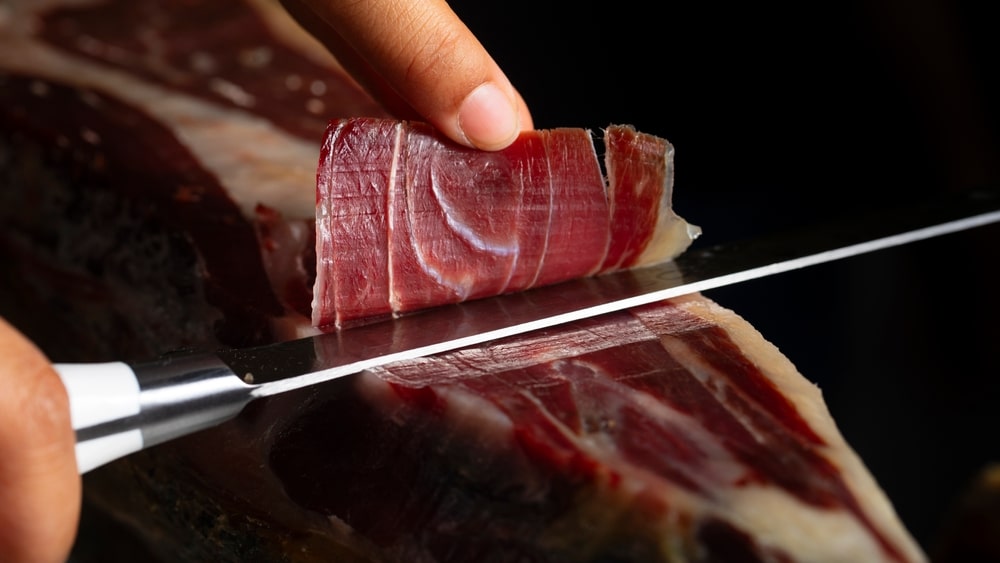
Dalmatian prosciutto is one of the symbols of Dalmatian gastronomy and an essential part of the culinary heritage of the Split-Dalmatia County. Born from a combination of craftsmanship, patience, and the unique natural conditions of the Dalmatian region, this traditional delicacy represents much more than a local specialty – it embodies the region’s identity, hospitality, and a way of life passed down from generation to generation.

The production of Dalmatian prosciutto begins with carefully selected pork legs, which are salted with sea salt, dried, and left to mature over an extended period. Natural conditions play a crucial role in this process, particularly the cold, dry winds such as the bura, which help develop its distinctive aroma and texture. It is precisely this combination of traditional production methods and the region’s unique climate that gives Dalmatian prosciutto its unmistakable character.

Producing high-quality prosciutto requires time, knowledge, and patience. Every stage of the process demands care and expertise, resulting in a delicacy with a rich flavor, a pleasant aroma, and a firm yet delicate texture.

Flavors of the Dalmatian Hinterland

Throughout Split-Dalmatia County, prosciutto is deeply rooted in local culinary traditions, particularly in the hinterland and rural areas where the skills of drying and preserving meat have been refined over generations. The Dalmatian hinterland, with its distinctive climate and strong tradition of artisanal food production, plays an important role in the story of this highly prized delicacy.

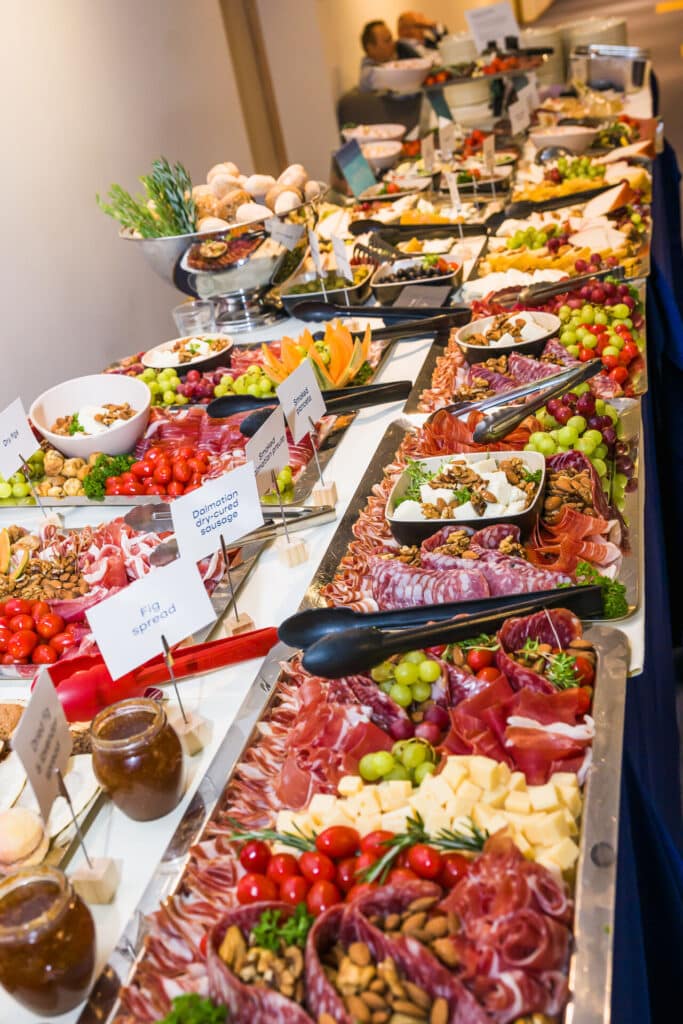
Prosciutto is traditionally served in thin slices, often accompanied by homemade bread, olives, cheese, and a glass of quality local wine. This simple presentation allows its aroma and full flavor to shine, while pairing it with local ingredients further highlights the richness of Dalmatian cuisine.

An Essential Part of the Dalmatian Table

From family gatherings and festive celebrations to traditional taverns, restaurants, and special occasions, prosciutto holds a special place in Dalmatian dining culture. It is often the first delicacy offered to guests, serving as a symbol of hospitality and an opportunity to introduce visitors to the very best of the region’s culinary heritage.

In contemporary gastronomy, Dalmatian prosciutto continues to maintain its traditional role while also finding its way into more creative dishes – from appetizers and platters of local specialties to innovative combinations with seasonal ingredients and cheeses produced by local artisans.

A Taste That Tells the Story of Dalmatia

Dalmatian prosciutto is more than just a product – it tells a story of people, landscapes, and knowledge preserved over centuries. Its true value lies in its deep connection to the local environment, respect for traditional production methods, and the special place it holds in both everyday life and festive celebrations.
Imotska Torta — The Sweet Crown of the Imotski Region

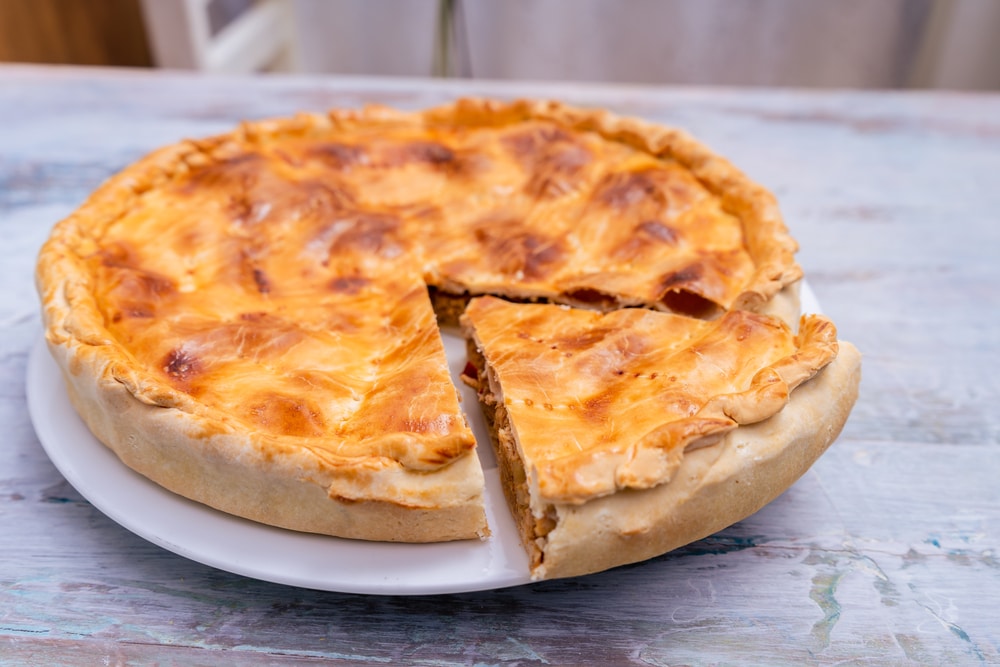
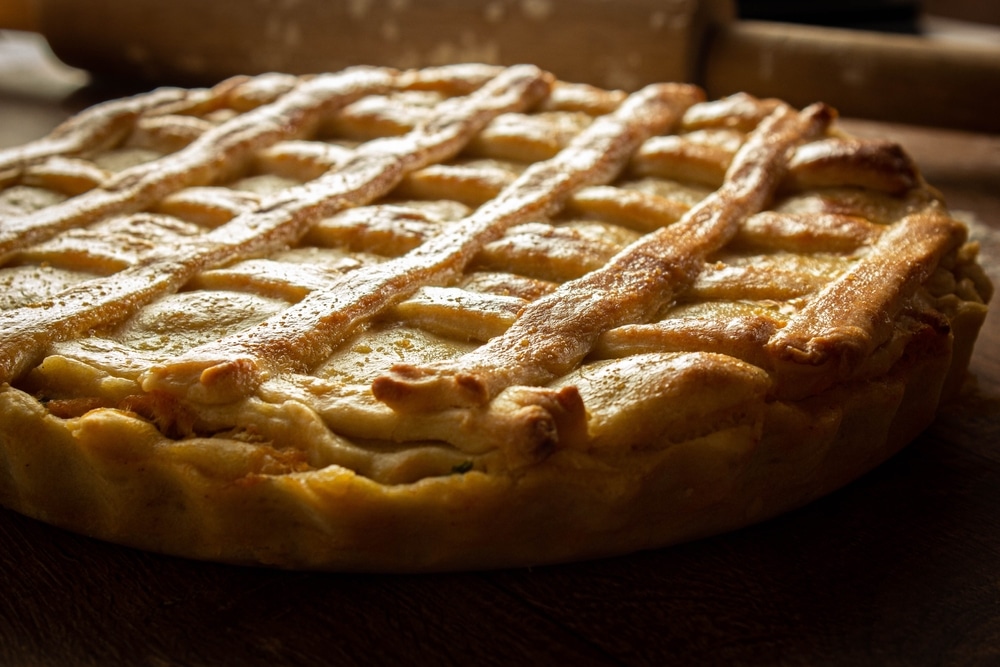
A special place on the festive tables of the Imotski region belongs to a cake that is instantly recognisable. Round, richly decorated and topped with a distinctive crown-like finish, Imotska torta is a dessert that combines a wealth of flavours with craftsmanship passed down through generations.

Almonds are the star ingredient of its filling, combined with sugar, eggs, aromatic spices, lemon and orange zest, and traditional additions such as prošek dessert wine and maraschino liqueur. A shortcrust pastry base holds the rich filling, while the top is decorated with a lattice of pastry and distinctive small curls that give the cake its crown-like appearance.

Imotska torta is traditionally prepared for weddings, christenings, holidays and other important family occasions. Its uniqueness lies not only in the recipe, but also in the skill involved in its preparation, the intricate decoration and the care devoted to a cake reserved for special moments.

In 2026, the art of making Imotska torta was entered into the Register of Cultural Goods of the Republic of Croatia as an element of intangible cultural heritage. This officially recognised its importance to the identity of Imotski and the surrounding region.

For visitors wishing to discover the gastronomic heritage of Dalmatia’s hinterland, Imotska torta offers an opportunity to explore local customs, family stories and a craft that continues to be preserved and practised today.

Komiža Carob — An Island Fruit with the Aroma of Chocolate

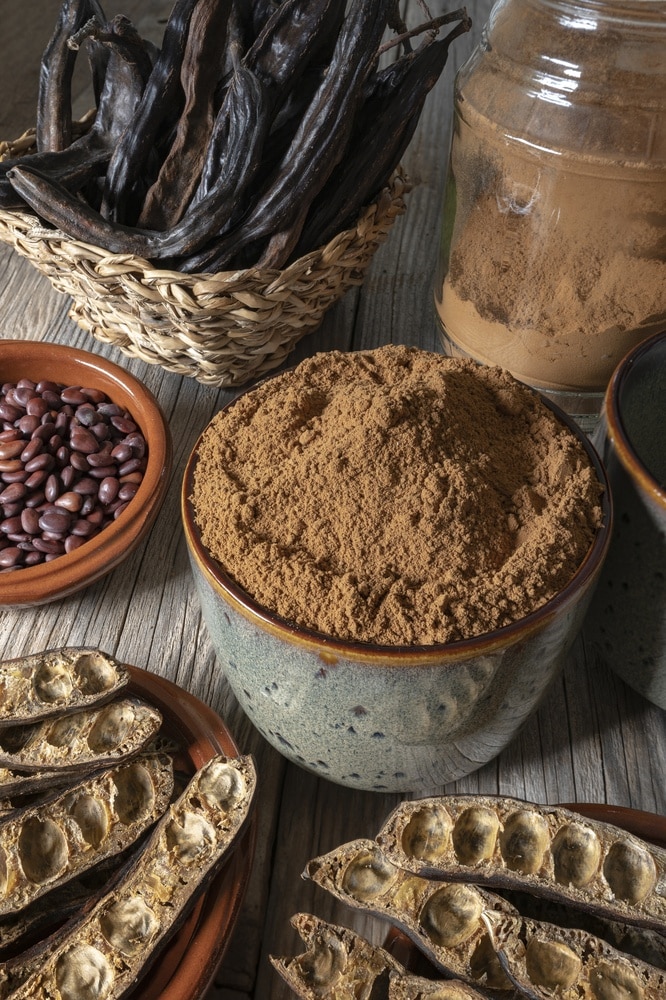
On the island of Vis grows a fruit that resembles a dark pod and has an aroma and flavour reminiscent of chocolate and cocoa. This is Komiža carob, a traditional island product whose distinctive qualities have also been recognised through European protection.

Komiža carob comes from the indigenous carob variety Komiški krupni, which is listed in the Croatian Plant Gene Bank. The ripe pods are dark brown, and the fruit is known for its pronounced sweetness. According to official data, its sugar content is at least 40 per cent. It is marketed both as whole pods and as ground carob, whose chocolate and cocoa aromas are particularly pronounced.

In 2023, Komiža carob was registered as a Protected Geographical Indication (PGI) by the European Union. This protection confirms its connection to the island of Vis and preserves the distinct identity of a product that differs from carob grown in other regions.

Carob can be used as an ingredient in cakes, desserts and other dishes. What makes it special is its natural sweetness and distinctive aroma, offering a different perspective on island gastronomy beyond the familiar flavours of fish, olive oil and wine. Komiža carob demonstrates just how many interesting flavours can be found in the fruits of the Mediterranean.

Brač Varenik

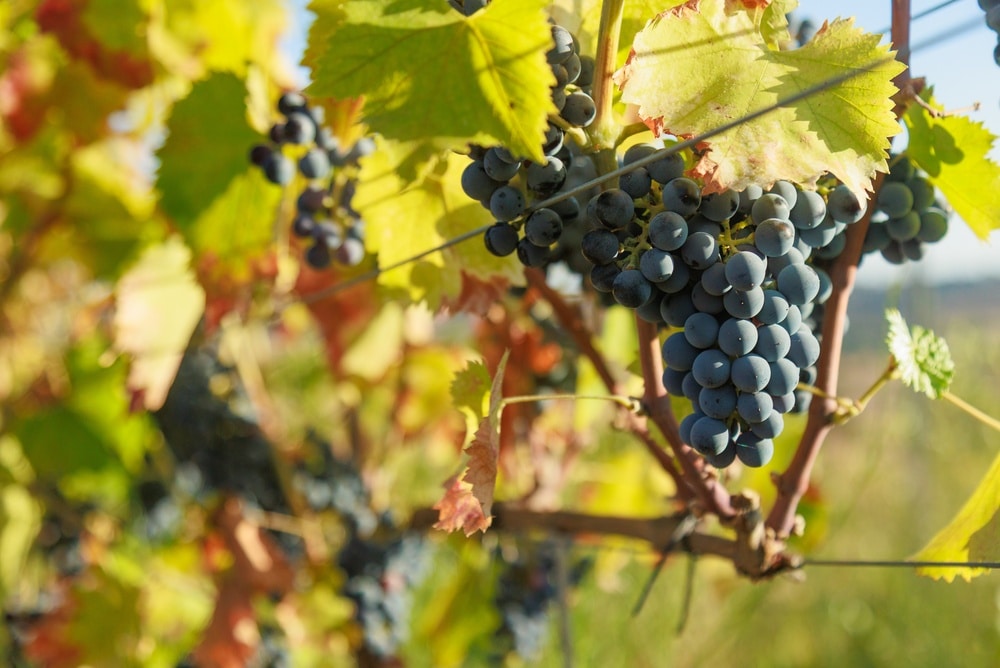
Grapes are most commonly associated with wine, but in traditional gastronomy they can serve a different purpose too. On the island of Brač, their juice is used to make varenik, a product that demonstrates how a simple ingredient can be transformed into a concentrated addition to a variety of dishes.

Brač varenik is made by slowly reducing the strained juice of fresh or semi-dried grapes from indigenous grape varieties. The juice is heated until its original volume is reduced to approximately one-third, resulting in a concentrated product used to enhance the flavour of food.

Its distinctive character has also been recognised at European level. In 2020, Brač varenik was registered as a product with Protected Geographical Indication (PGI) status. This recognition confirms its connection to Brač and to a tradition of production that has preserved a different way of using grapes from the one we are most familiar with.

Varenik is particularly interesting because it is not intended to take centre stage as a main dish, but rather to enrich other ingredients. Products like this reveal the breadth of local gastronomy: sometimes, the identity of a region is found not only in what is served on the plate, but also in the small additions that give a dish its distinctive note.

Viška and Komiška Pogača — Two Stories, One Island Flavour

On the island of Vis, two closely related dishes tell different stories. Viška and Komiška pogača share the same basic ingredients of dough, salted fish and olive oil, yet each reflects the local traditions in which its recipe has been passed down through generations.

Viška pogača is traditionally made from dough filled with salted fish, most commonly sardines or anchovies, along with olive oil and other ingredients that vary according to family recipes. Komiška pogača is distinguished by the addition of tomatoes, which give the filling a different character. This simple difference has become one of the most interesting features of the island’s culinary heritage.

Both varieties are closely linked to the island’s fishing traditions and a cuisine shaped by locally available ingredients. Salting was an important way of preserving the catch, while the dough provided the basis for a hearty dish that could be enjoyed at home or taken along on the day’s activities.

Today, Viška and Komiška pogača are distinctive features of the gastronomic offering of Vis and Komiža.

Tasting these two pogače becomes a small culinary journey between Vis and Komiža, where a difference in a single ingredient reveals the richness of local customs and island identity.

Dalmatian pechenitsa

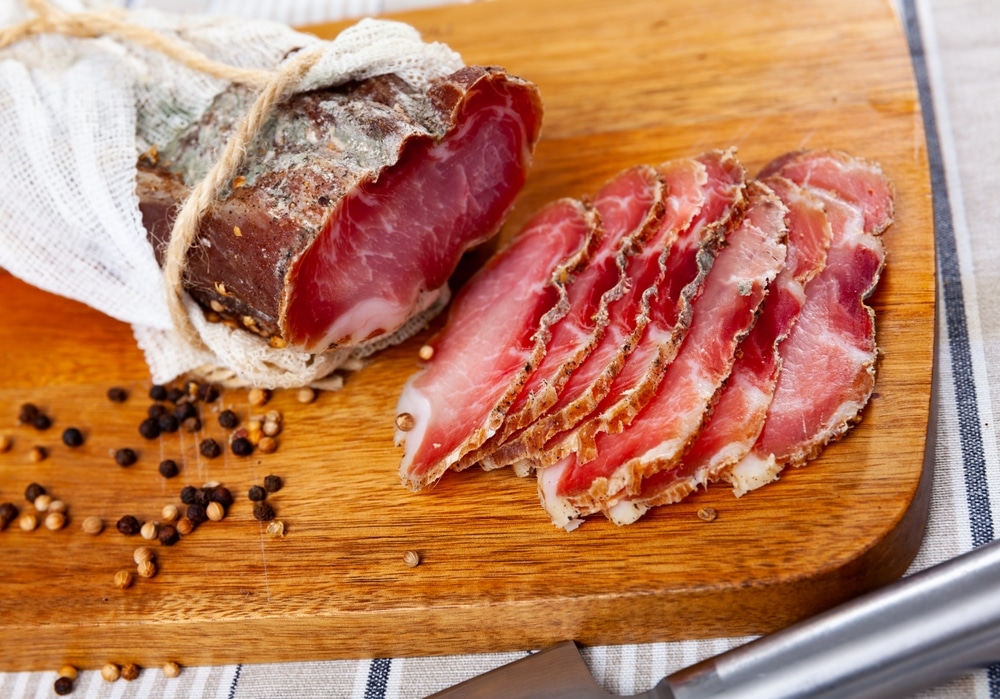
At first glance, it may seem like a simple piece of cured meat. Yet Dalmatian pečenica is the result of a series of precise processes in which the selection of raw ingredients, salting, cold smoking, and controlled drying and ageing all play an important role.

Dalmatian pečenica is made from a trimmed, boneless cut of the longissimus dorsi muscle of pigs. After salting or curing in brine, the meat undergoes cold smoking, drying and ageing. The entire process must comply with the product’s official specification.

In 2021, the name Dalmatian pečenica was registered as a Protected Geographical Indication (PGI) in the European Union. This protection confirms the product’s distinctive link to a defined geographical area and ensures that its production follows established rules.

Thinly sliced, pečenica is a natural part of the Dalmatian tradition of cold starters, where cured meat products are served simply, without unnecessary additions. Its value lies not in a complex recipe, but in the skill and time required to transform carefully selected raw ingredients into a product with distinctive characteristics.

Dalmatian panceta

Before refrigerators, freezers and modern food preservation methods, salting, smoking and drying were essential ways of extending the shelf life of food. Dalmatian panceta is rooted in these very techniques, demonstrating how traditional knowledge shaped everyday cooking.

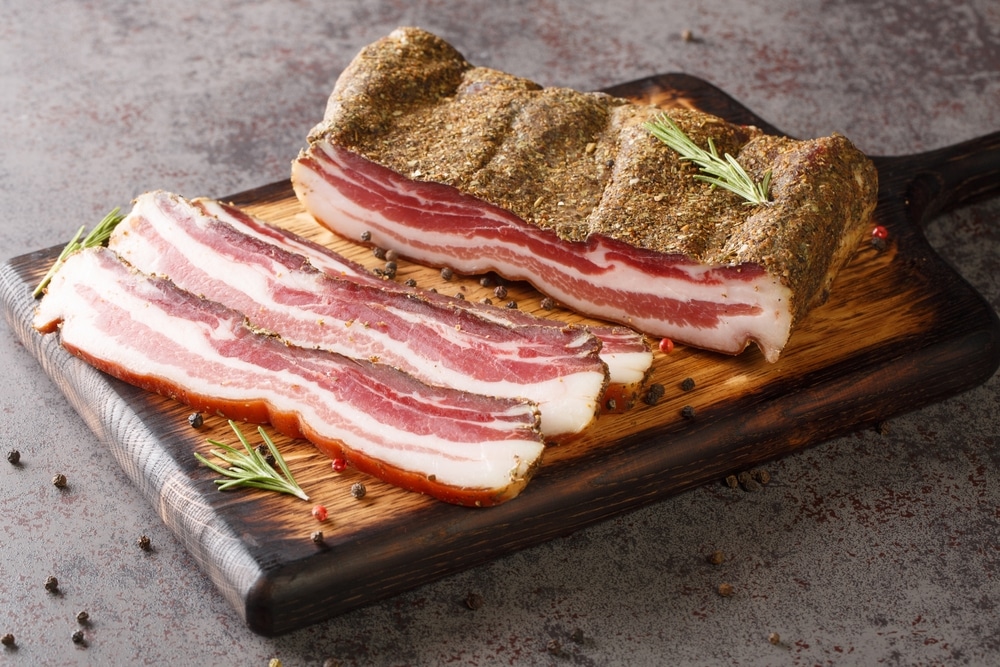
Dalmatian panceta is made from the meaty belly of pigs, which is salted or cured in brine, cold-smoked, dried and aged. According to the official product specification, it is a dry-cured meat product with a rectangular shape. Its mild smoky aroma, salty taste and succulent texture are among its defining characteristics.

In 2021, the name Dalmatian panceta was granted Protected Geographical Indication (PGI) status by the European Union. This means that the production methods and the geographical area of production have become part of the product’s officially recognised identity.

On a Dalmatian table, panceta can be served as part of a cold platter, added to simple dishes or used as an ingredient that gives a meal a richer flavour. Its story is a reminder that, in gastronomy, it is often the skill of processing and the understanding of an ingredient that transform something simple into a distinctive local product.

Dalmatian lamb

The rocky pastures, the scent of Mediterranean herbs and the vast landscapes of the Dalmatian hinterland have all shaped the region’s centuries-old tradition of sheep farming. This is where Dalmatian lamb comes from, a product that holds an important place in local gastronomy and in gatherings around the table.

Dalmatian lamb comes from lambs of the Dalmatian Pramenka, an indigenous Croatian sheep breed. The animals must be born, raised and slaughtered in the Dalmatia region. The lamb’s distinctive characteristics are linked to the breed and the prescribed production conditions. In 2023, the name Dalmatian Lamb was registered as a Protected Designation of Origin (PDO) by the European Union.

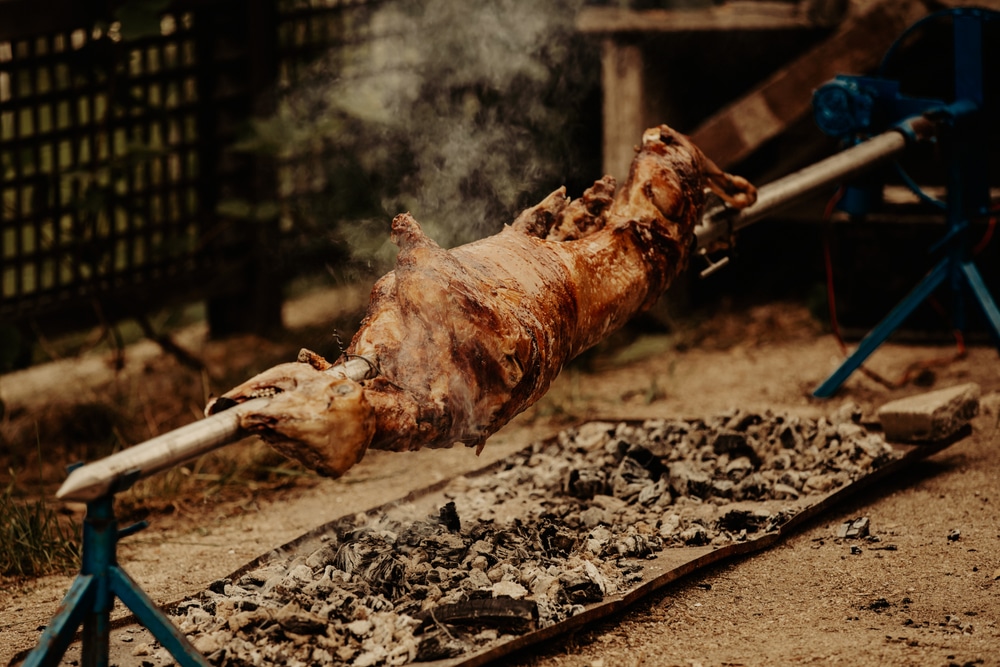
Dalmatian lamb is prepared in a variety of ways, depending on local customs and family recipes. Whether spit-roasted over an open fire or slow-cooked under a traditional peka bell, it is often served at celebratory lunches and family gatherings that continue long after the meal has been served.

This is an essential part of its story: Dalmatian lamb is more than a gastronomic speciality. It connects the landscape, traditional sheep farming and a way of life that has been passed down through generations in Dalmatia.

Central Dalmatia at the European Parliament – From Dalmatian Marenda to European Region of Gastronomy

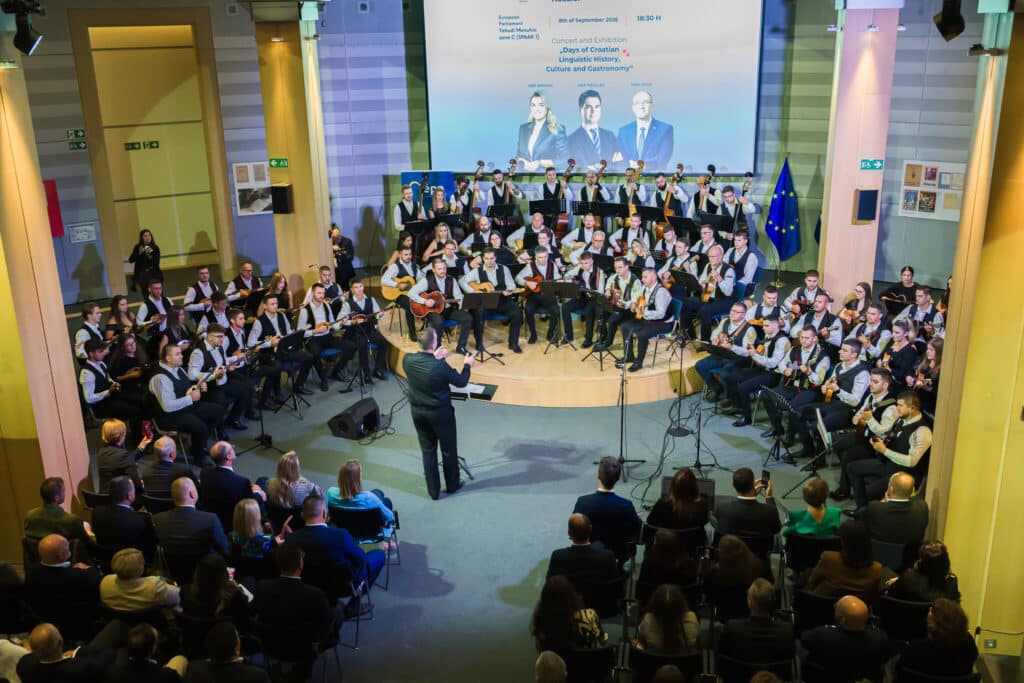
Central Dalmatia presented its cultural and gastronomic heritage in Brussels as part of the “Days of Croatian Linguistic History, Culture and Gastronomy” event, held at the European Parliament.

Through the promotional films “The Dream is Real” and “Dalmatian Marenda”, we introduced audiences to what makes Central Dalmatia unique: its landscapes, people, everyday life, traditions and gastronomy.

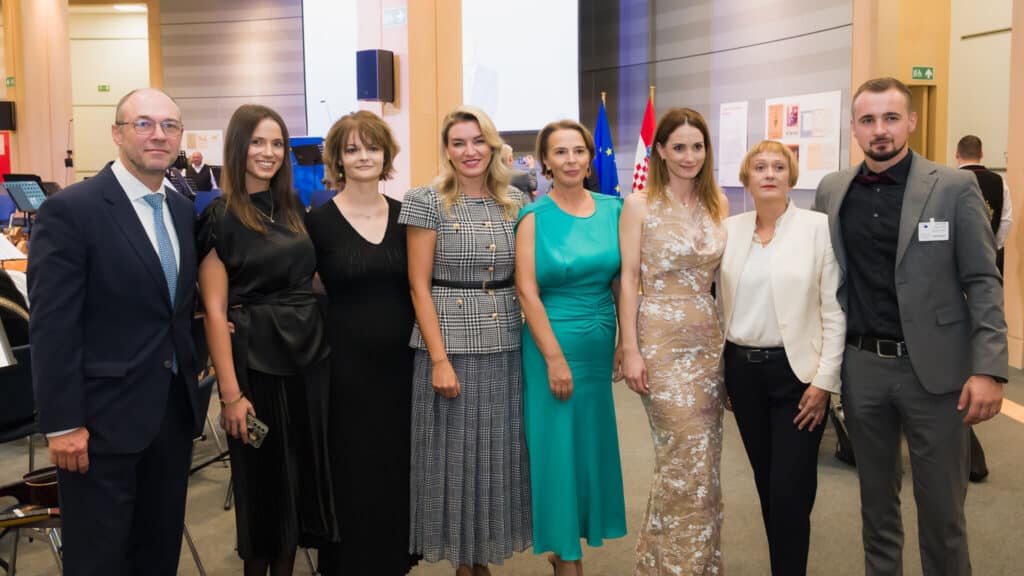
The presentation took place in the presence of numerous senior representatives of European and Croatian institutions, including European Parliament President Roberta Metsola; Members of the European Parliament Nikolina Brnjac, Davor Ivo Stier and Karlo Ressler; European Commissioner for the Mediterranean Dubravka Šuica; and Minister of Tourism and Sport Tonči Glavina. Ivana Vladović, Director of the Tourist Board of Split-Dalmatia County, also took part in the programme.

The presentation was particularly meaningful as Central Dalmatia prepares to hold the title of European Region of Gastronomy in 2027. The region’s gastronomy is about much more than food. It brings together the coast, islands and Dalmatinska Zagora, local produce, customs, language, music and ways of life. It is an integral part of the identity of the region and the people who shape it and keep its traditions alive.

That is the story we brought to Brussels, from Dalmatian marenda and traditional products to music and the shared table.

Completing the Croatian cultural experience was the 90-member tamburitza orchestra of the Slavonska Rapsodija Association, accompanied by performances by Katica Marinović and Danijel Curić.

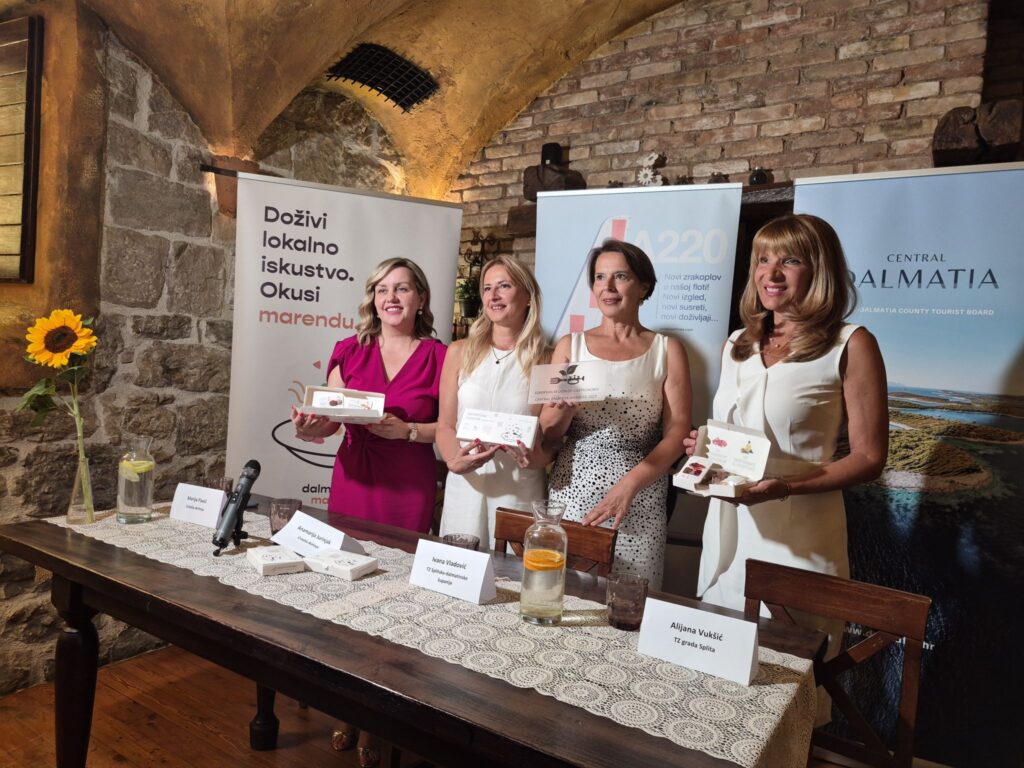
Dalmatian Marenda Returns to Croatia Airlines Flights

From 1 August to 30 November 2026, passengers travelling with Croatia Airlines can once again enjoy specially curated Dalmatian Marenda food packages, offering an introduction to the authentic flavours of Dalmatia before they even arrive at their destination.

Each package features Dalmatian prosciutto, black olive spread, crackers with olive oil and rosemary, bobići (traditional crunchy sweets) and candied almonds. These carefully selected local flavours introduce passengers to Dalmatia’s culinary heritage and offer a first taste of the region while still on board.

The initiative is a joint project of the Tourist Board of Split-Dalmatia County, the Split Tourist Board and Croatia Airlines, supported by the Croatian National Tourist Board. It aims to promote Dalmatian gastronomy as an essential part of the region’s tourism offering and the overall visitor experience.