
latest articles

Before refrigerators, freezers and modern food preservation methods, salting, smoking and drying were essential ways of extending the shelf life of food. Dalmatian panceta is rooted in these very techniques, demonstrating how traditional knowledge shaped everyday cooking.
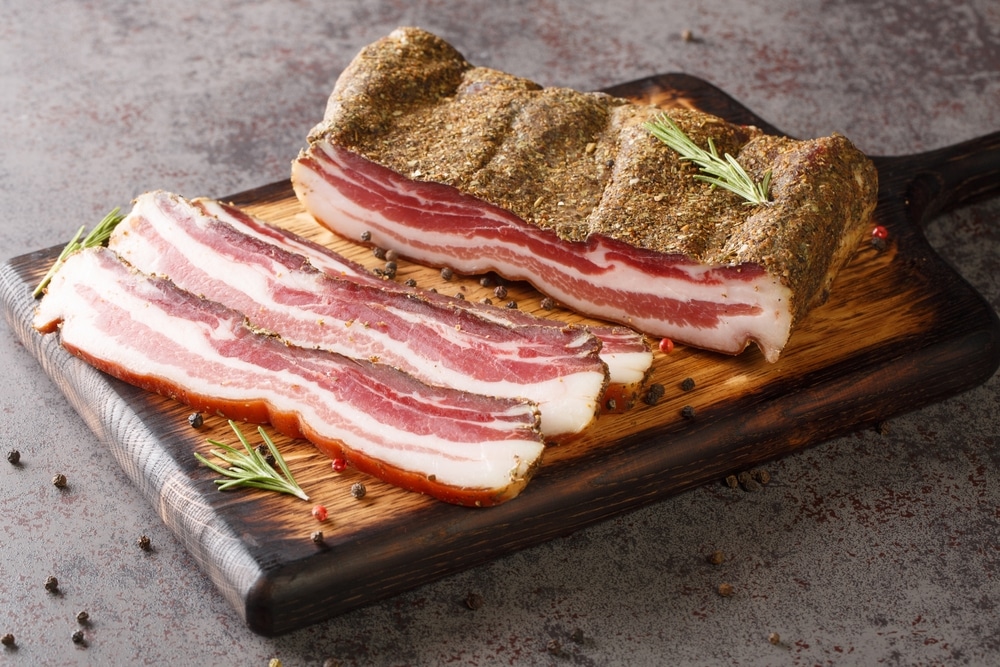
Dalmatian panceta is made from the meaty belly of pigs, which is salted or cured in brine, cold-smoked, dried and aged. According to the official product specification, it is a dry-cured meat product with a rectangular shape. Its mild smoky aroma, salty taste and succulent texture are among its defining characteristics.
In 2021, the name Dalmatian panceta was granted Protected Geographical Indication (PGI) status by the European Union. This means that the production methods and the geographical area of production have become part of the product’s officially recognised identity.
On a Dalmatian table, panceta can be served as part of a cold platter, added to simple dishes or used as an ingredient that gives a meal a richer flavour. Its story is a reminder that, in gastronomy, it is often the skill of processing and the understanding of an ingredient that transform something simple into a distinctive local product.