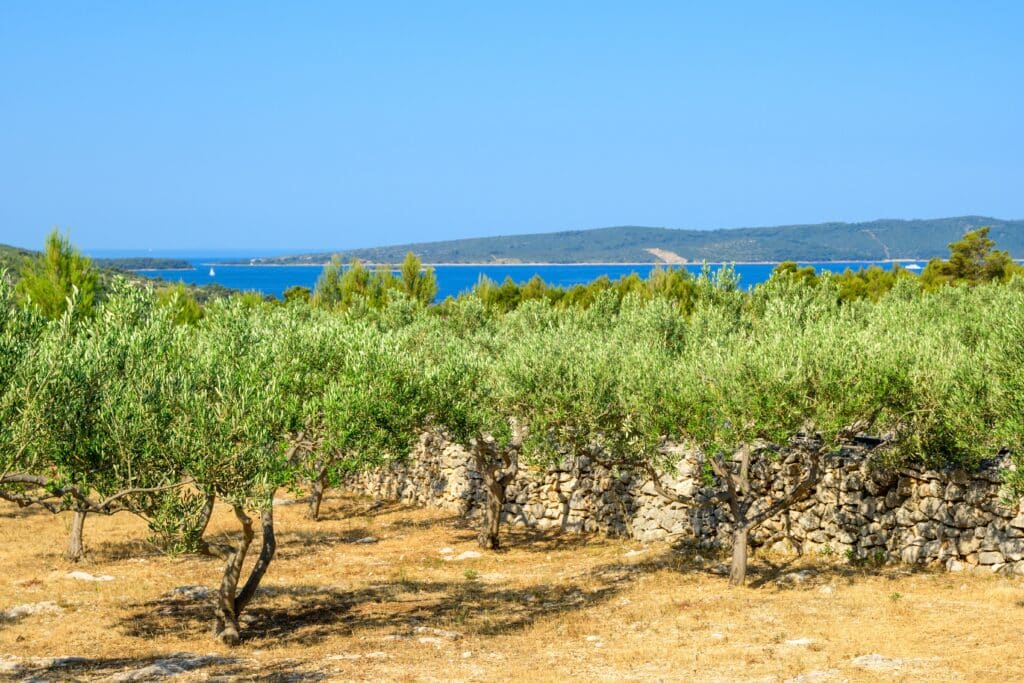
Brač is known not only for Zlatni Rat beach, its white stone and lamb, but also as Croatia’s largest olive-growing region. Around one million olive trees grow on the island, where olive cultivation has been part of the local identity and way of life for centuries.
The Origins of Olive Growing on Brač
The earliest written references to olive cultivation on Brač are associated with the Roman writer Strabo, who lived in the first century BC. The island’s most important olive variety is Oblica, an indigenous Dalmatian olive also listed as “Brač” in the international catalogue of olive varieties. It accounts for most of Brač’s olive oil production and helps explain the distinctive character of the island’s oil.
Oblica is a dual-purpose variety, with oil content ranging from 17 % to 22 % in the fruit. It produces fruity olive oil with a mild bitterness and peppery notes. These are not flaws, but indicators of quality: the bitterness and pungency come from natural antioxidants, particularly polyphenols.
What is“Brač Olive Oil”?
“Brač Olive Oil” is more than just a marketing name. It is extra virgin olive oil that received Protected Designation of Origin (PDO) status from the European Union in 2022. This means it is produced exclusively on the island of Brač, using olives grown on the island, and must meet strict production standards.
For olive oil carrying this designation, Oblica must account for at least 80% of the olives used, while other varieties may make up no more than 20%. The oil is obtained exclusively through mechanical processes and is characterised by low acidity, a high content of phenolic compounds, and balanced bitterness and pungency.
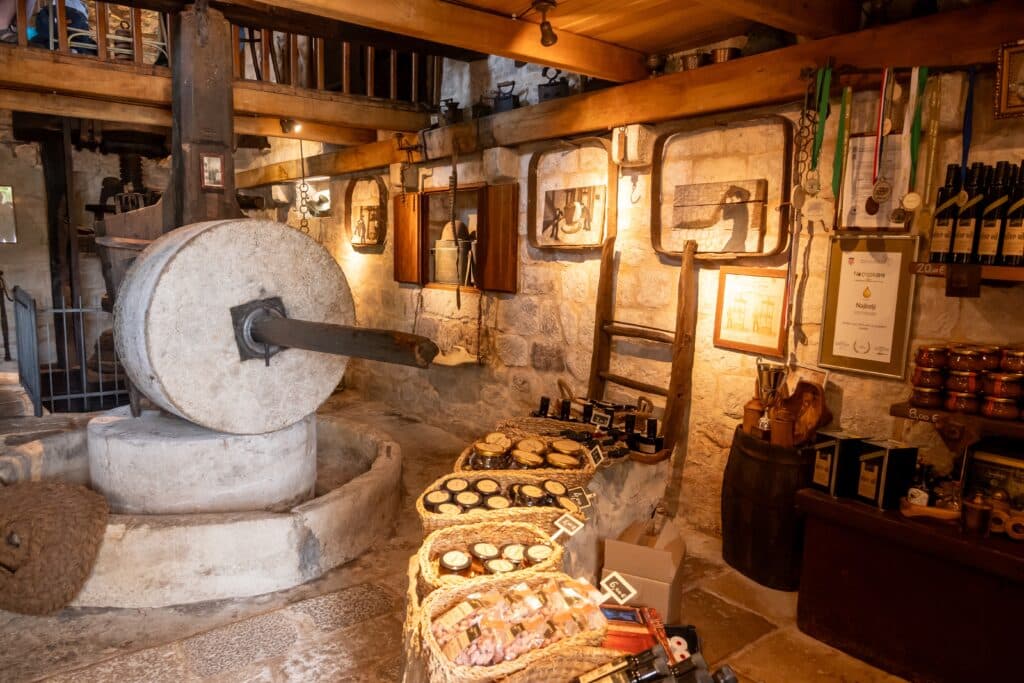
Olive oil museum, Škrip, Brač
How to Taste Brač Olive Oil
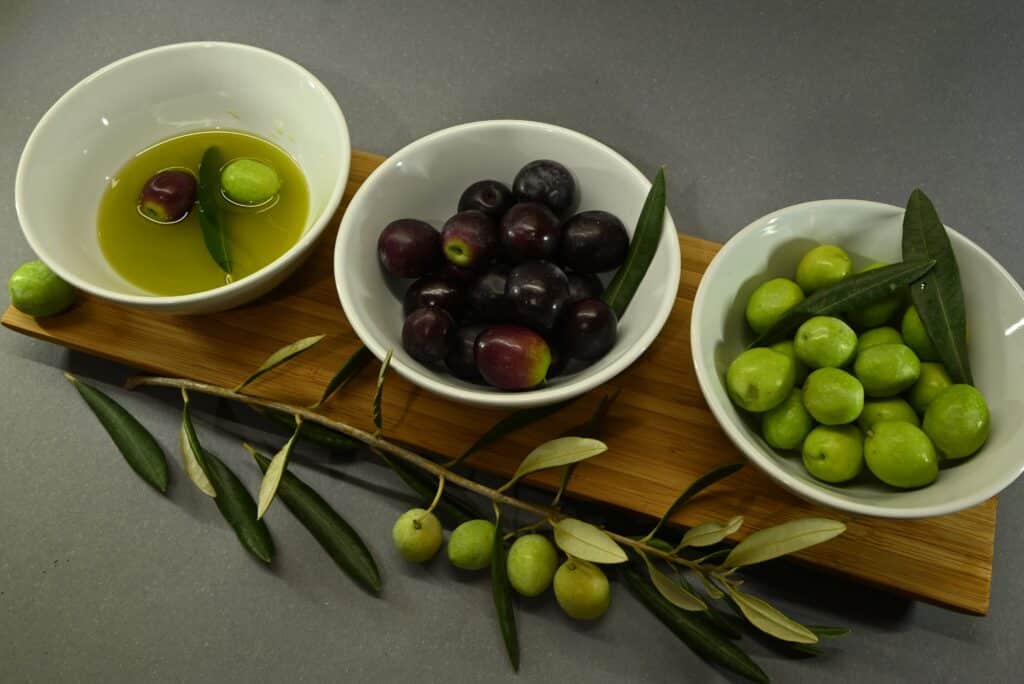
Brač olive oil has a fresh aroma reminiscent of green olives, grass and leaves. On the palate, it is usually well balanced, revealing fruitiness, mild bitterness and a peppery sensation at the back of the throat.
The best way to taste it is simple: pour a little oil into a glass or drizzle it over white bread, warm the glass gently in your hands, take a brief sniff and then a small sip. This makes it easier to recognise the difference between fresh, high-quality olive oil and oil that has lost its aroma.
What to Serve It With
Brač olive oil is at its best when it enhances rather than overpowers the flavour of food. It pairs beautifully with grilled white fish, cooked vegetables, fresh salads, potatoes, cheese and bread. Its balanced profile makes it ideal for everyday use, not just special occasions.
For a combination that captures the true spirit of the island, try Brač cheese, homemade bread, olives and a drizzle of Brač olive oil. Add a glass of Plavac Mali, and you have a simple introduction to why Brač is known as the island of olives.
Where to Taste It
Brač olive oil is easiest to sample at olive mills and family-run farms, particularly in Supetar, Postira, Bol and the surrounding area. Many producers offer tastings, sell their products directly from the farm, and explain the differences between harvests, olive varieties and processing methods. A special place in this story belongs to the Olive Oil Museum in Škrip, where visitors can discover how olive oil was traditionally produced, explore old stone mills and traditional tools, and taste local products from the island.