Grape Harvest in Dalmatia: From the Early Morning Hours to the Last Bunch
Date
28.10.2026
Reading Time
3 min
In Dalmatia’s vineyards, the harvest begins early, while the air is still cool and the first rays of sunlight illuminate the rows of vines. Pruning shears, crates and the chatter of pickers mark the beginning of one of the most important periods of the vineyard year. After months of hard work and anticipation, the grapes are ready to be harvested, and choosing the right moment often determines the character, aromas and quality of the wine to come.
Harvest Timing Is Decided in the Vineyard
In central Dalmatia, the grape harvest usually begins in August and continues into September, depending on the grape variety, weather conditions and vineyard location. On the islands and along the coast, grapes may ripen earlier, while in other vineyards, growers wait until the berries develop the right balance of sugars, acidity and aromatic compounds.
That is why grape growers look beyond the colour of the bunches or the size of the berries. They monitor ripeness, taste the grapes and assess the quality of the crop. Some varieties require full ripeness, while others are harvested with the aim of preserving greater freshness. Deciding when to begin the harvest is a combination of experience, weather monitoring and an intimate knowledge of each vineyard site.
From Sun-Drenched Slopes to Harvest Crates
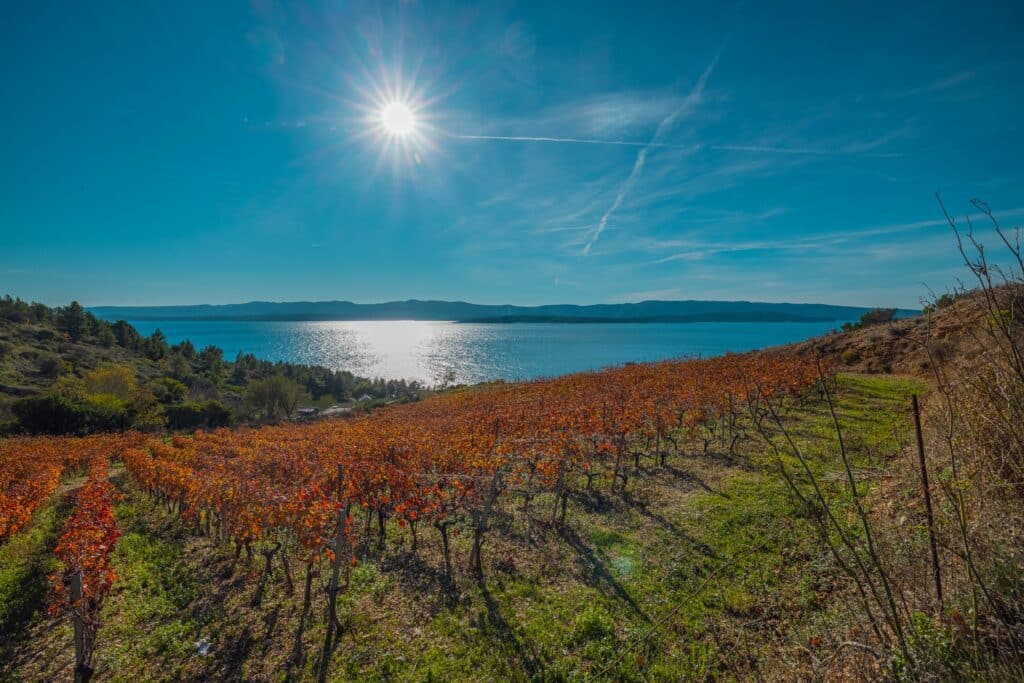
On Hvar, Brač, Šolta and throughout other parts of the county, vineyards often grow on rocky soils in locations exposed to sun and wind. Working in these conditions requires hard work and careful organisation, and on steeper terrain, much of the work is still done by hand.
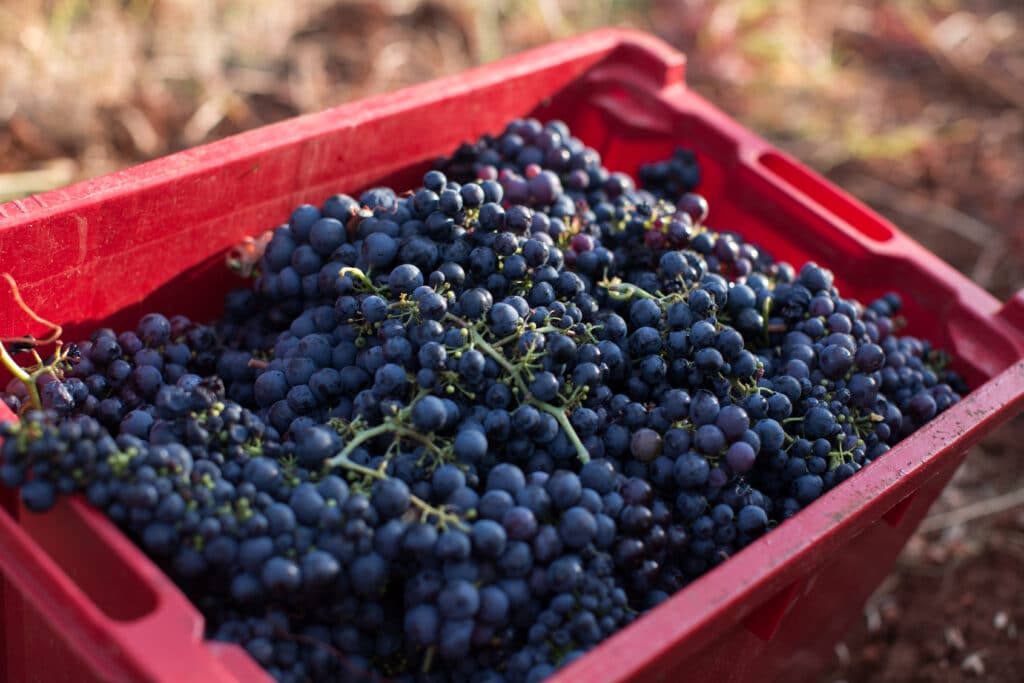
Hand-picking allows harvesters to select bunches more carefully and remove damaged or unripe berries. The harvested grapes are placed in crates and transported to the winery as quickly as possible, where the next stage begins: processing. Speed is important, as prolonged exposure to high temperatures can negatively affect grape quality, particularly in white varieties.
Vineyards in Dalmatia
From Grapes to Wine
Once the grapes arrive at the winery, they are destemmed, crushed and prepared for further processing, depending on the grape variety and the desired wine style. For white wines, pressing often follows, while red wines typically remain in contact with the grape skins for a period of time, allowing them to extract colour, tannins and some of the aromatic compounds.
Fermentation comes next, as yeast converts the sugar into alcohol. However, the work does not end with the harvest. The wine continues to be carefully managed, monitored and tasted, while the winemaker decides whether it will mature in stainless steel tanks, wooden barrels or a combination of different vessels.
A Tradition Passed Down Through Generations
The grape harvest in Dalmatia is not just the end of a cycle of work, but also an important social occasion. Families, friends and seasonal workers gather in the vineyards, where the working day is often accompanied by a traditional homemade meal and conversations about the crop. In some families, knowledge of grape harvesting and winemaking has been passed down through generations, along with stories of old vines, challenging years and exceptional vintages.
Although modern winemaking increasingly relies on precise measurements and advanced technology, the experience of grape growers remains essential. Every harvest brings different conditions and new decisions, and its outcome can never be fully predicted in advance.
When the last crate leaves the vineyard, one of the most demanding periods of the viticultural year comes to an end. The harvested grapes continue their journey towards becoming wine, while the vines remain in the vineyards, preparing for a new cycle after autumn and winter. For grape growers, it is a moment of relief, but also the beginning of a new anticipation: what kind of wines will this year’s harvest bring?